Request a free offer
We look forward to learning more about you and your project.


You are considering outsourcing your logistics. Not for convenience, but because your shop has reached a point where growth suddenly sounds like shipping processes. More orders, more variants, more speed. And at some point, that one question that decides everything arises.
Is our shop system compatible with fulfilment?
If you use Shopify, Shopware, WooCommerce, Magento, Adobe Commerce or JTL, you're in good company. These are the systems that shop operators in the DACH region particularly often check to see if a fulfilment connection really works smoothly. This article starts right there and stays consistently focused on the core issue. What can the system do on a day-to-day basis, where does it sometimes get stuck, and how can you tell if the connection will remain stable in the future?

A connection is good when you hardly notice it. Orders are processed reliably. Stock levels appear stable. Shipping status is reported accurately. And your team doesn't have to follow up on anything every day.
To achieve this, the shop system must accurately map three core elements.
Firstly, a clear transfer of orders. Variants and product logic must not only look good in the front end, they must also function clearly in the warehouse.
Secondly, reliable inventory logic. This ensures that your availability remains credible, especially when there is a lot of activity in the shop.
Thirdly, a clear return flow of shipping status and tracking. Even when partial deliveries occur or several parcels are on the way.
If these three flows are stable, the question of connectivity is usually quickly answered. Then it is no longer a matter of a basic yes or no, but of finding the right integration path.
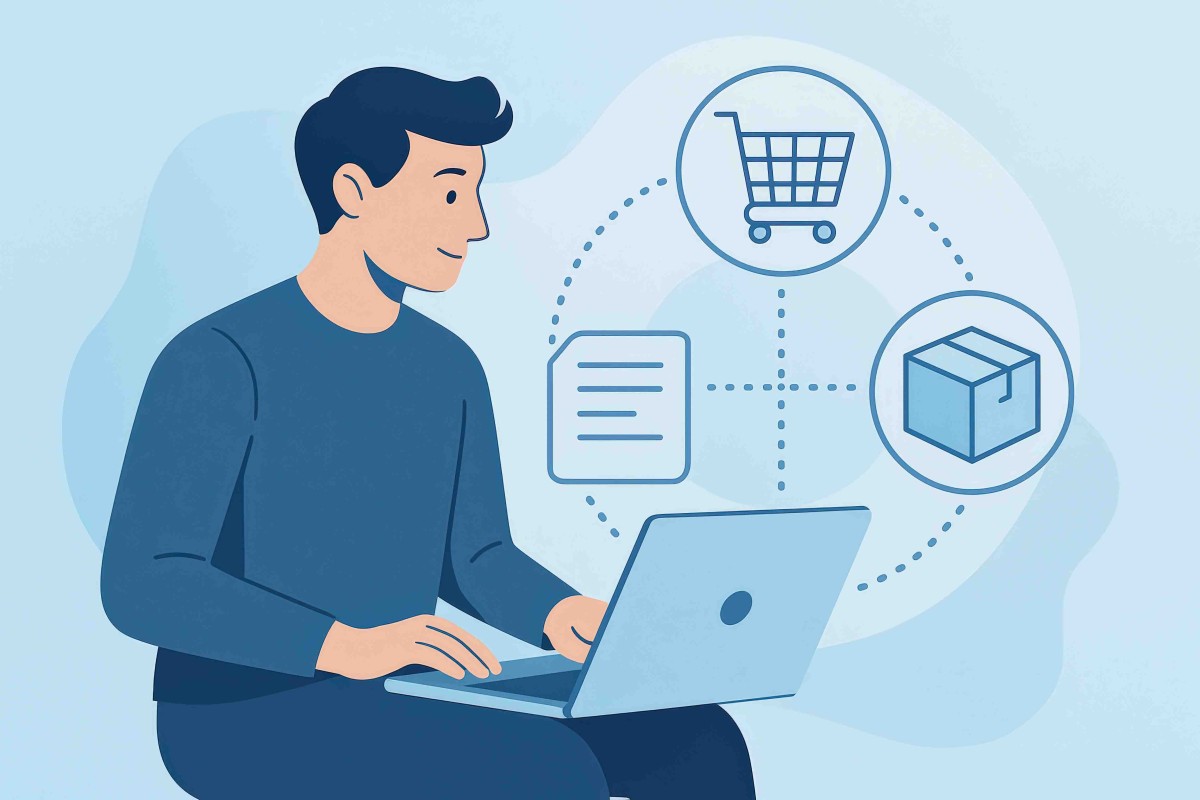
If you use one of these shop systems, there is a very good chance that a connection to an e-commerce fulfilment service provider can be implemented smoothly. Not because every project is automatically easy, but because these systems are so common in practice that their typical integration paths have been tried and tested.
What you notice in everyday life is often the real point. Outsourcing feels like giving up control at first. In practice, it often feels like gaining an overview. Inventories become more reliable. Shipping status becomes clearer. Special cases become more predictable. And your team regains space for the issues that really drive your shop forward.
Fulfillment is not a leap into the unknown. For many shops, it is the step that turns growth back into something controllable. You retain your product range, your rules, your brand management. Operational logistics run more structured, stable and professional in the background.
If you are currently considering this step, that is a good sign. Your shop has reached a level where processes need to be supported. And that is exactly why fulfillment is worthwhile.

We look forward to learning more about you and your project.