
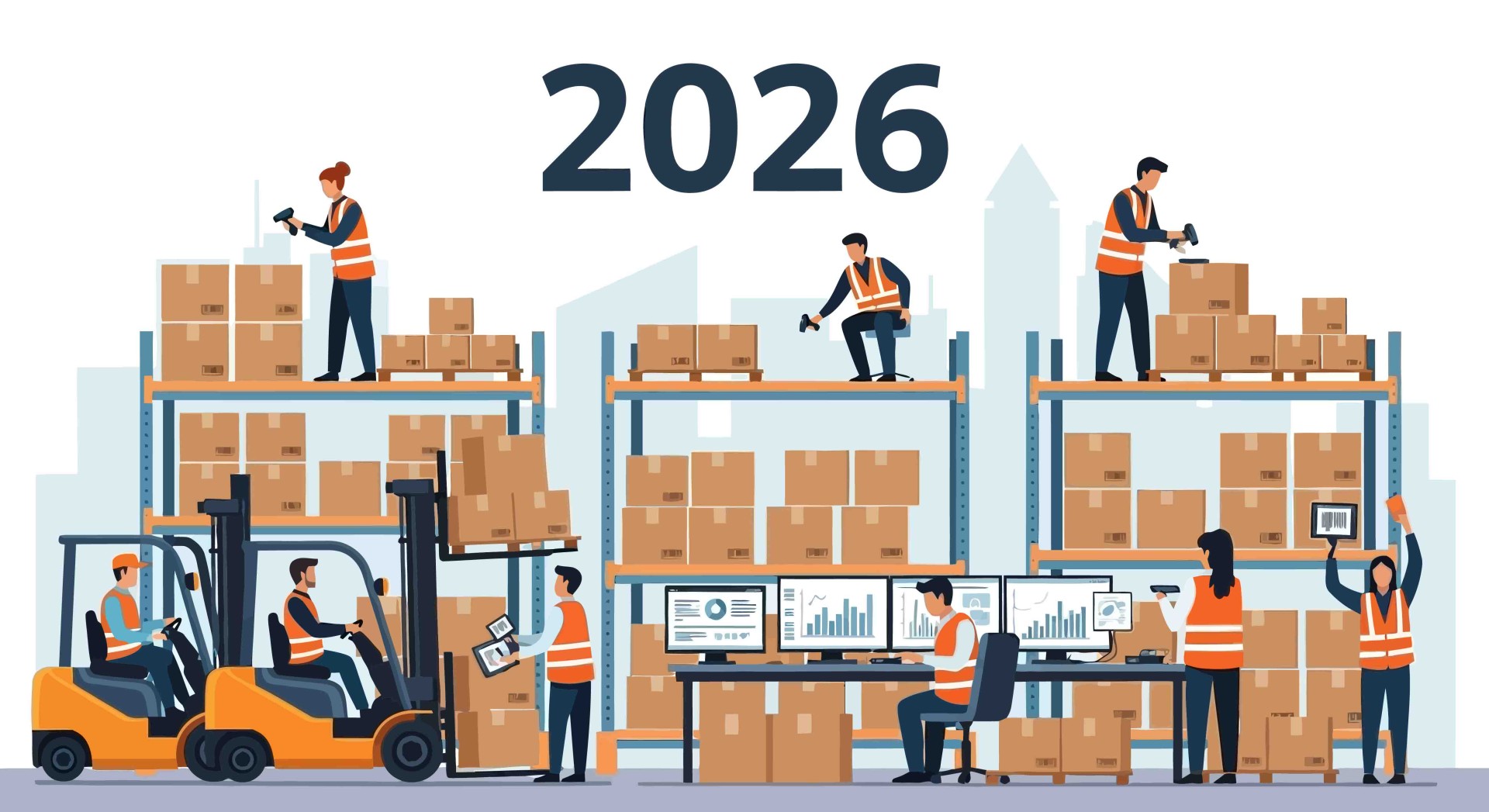
Hyperautomation only becomes valuable when it streamlines processes
2026 is not a year in which logistics is simply "modernized." It's a year in which many companies are realizing that growth and complexity only fit together when logistics runs like a stable operating system. More orders, more channels, more variants in the range, shorter delivery windows, higher expectations for returns and service. None of that can be offset by individual optimizations alone. It takes processes that think ahead.
That's exactly the perspective from which we at Bergler industrieservices look at the trends for 2026. Not as a tech showcase, but as the question of what really helps our customers in day-to-day operations. What takes the pressure off operations, what ensures predictable throughput times, and what still holds up when the peak arrives.
Hyperautomation only becomes valuable once it brings calm to operations
Hyperautomation is one of the key terms for 2026. For us, that doesn't mean simply needing "more robots." The difference emerges where mechanical components and software grow together into a dynamic network.
When shuttles, conveyor technology, robotics and control systems communicate with each other in real time, it noticeably changes operations. Material flows adapt automatically, priorities can be mapped cleanly, and disruptions are detected before they work their way through the process. Resources are distributed to where they currently have the greatest impact. That sounds technical, but in everyday operations it is very concrete.
For our customers, that means less manual correction, fewer exceptions, less coordination effort. Instead, calm sets in. And calm is no luxury in logistics. It's the precondition for growth to feel controlled.
Sustainability moves into the process, because it directly affects cost and stability
At the same time, the role of sustainability is changing. In 2026 it is no longer a side project that's "also" running along. It becomes an operational control variable, because energy, material usage and packaging have a direct impact on cost, throughput and delivery capability.
Digital twins help make energy and resource consumption visible along the supply chain. Not as reporting, but as a basis for decisions. You can see where effort arises, where processes consume unnecessary material, and where the logic in the warehouse or during packing no longer fits cleanly.
From our point of view, this is an important point. Sustainability doesn't work through individual measures, but through process logic. Whoever integrates it into workflows doesn't just reduce emissions, but gains stability. Less material waste, less handling, fewer returns due to damaged goods. In the end, this isn't a "green topic," but a question of efficiency and quality.
Predictive Planning turns reaction back into control
Another driver this year is data-based forecasting analysis. Predictive Planning is evolving from a specialist tool into a core competency. Artificial intelligence helps identify demand, utilization and risks at an early stage.
The benefit shows up exactly where reactions are often too late today. Bottlenecks that only announce themselves once the shift is already behind. Damage that only becomes apparent once complaints start piling up. Delays at handover points that are somehow absorbed, because they only become visible in reporting the next day.
When forecasts become more precise and systems react faster, a new standard emerges. Planning no longer happens in reverse, but ahead of time. That relieves teams, because fewer correction loops are needed. And it creates planning certainty, because exceptions become visible earlier.
This requires robust IT structures. Data must not only be collected, but made reliably available. Interfaces have to run stably, and systems have to work under load too. In 2026, that's no longer optional. It's the foundation.
Transparency and data competence become a genuine competitive advantage
With these developments, the importance of transparency and data competence grows. Logistics this year doesn't work in silos. IT, operations, planning and sustainability interlock more closely. Decisions arise less from gut feeling and more from jointly understood data.
That's also a point we repeatedly see in projects at Bergler. Technology only has an effect once teams speak the same language. Once it's clear what the data means and which decisions follow from it. Companies that promote this kind of collaboration increase their operational resilience. At the same time, acceptance of change grows, because it becomes comprehensible. Not as a "change project," but as an improvement that is felt in everyday operations.
What we take away from this is simple
Logistics in 2026 stands for more than new technology. It stands for a shift in mindsets, processes and collaboration. For our customers, we translate that into one clear goal.
Fulfillment should be structured so that growth remains possible without constantly having to catch up internally.
That means: Networked processes that adapt instead of tipping over. Transparency that makes decisions easier. IT structures that don't wobble when things get tight. And an operational logic that treats sustainability not as an add-on, but as part of the system.
Those who use data intelligently, network systems sensibly, and involve people in this development build supply chains that keep working even under pressure. Economically viable. Operationally stable. And set up in such a way that 2026 doesn't become more strenuous, but more controllable.

Request a free offer
We look forward to learning more about you and your project.