Request a free offer
We look forward to learning more about you and your project.
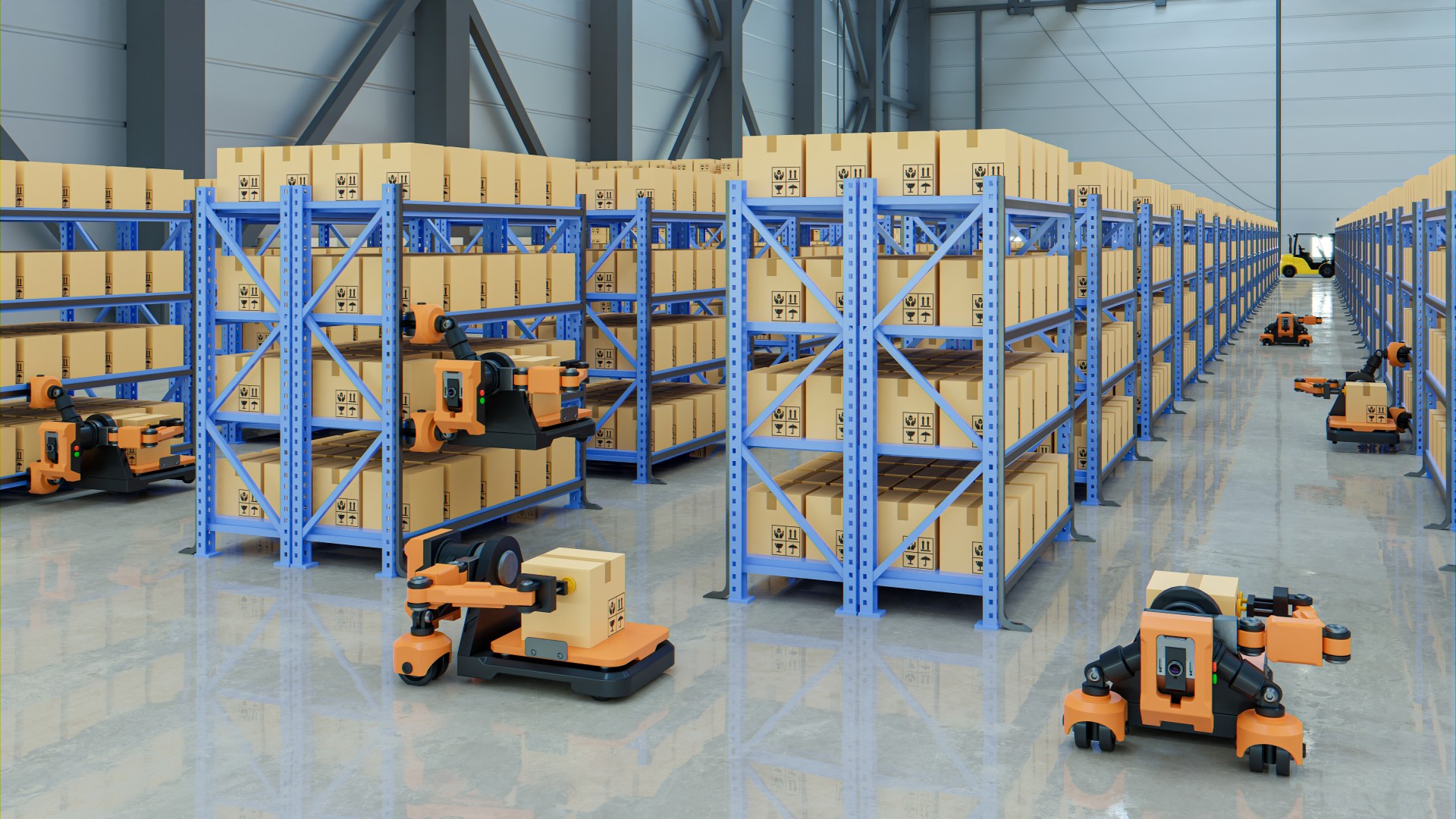
In a row storage system, the storage locations are organized in parallel rows. Between the rows are aisles or walkways that provide direct access to the storage locations. Row storage systems are among the classic storage structures in intralogistics and are often used when clear processes and direct access to stored goods are required.
A characteristic feature is the linear arrangement of storage locations along fixed aisles. Storage and retrieval takes place via these aisles – either manually or with the aid of industrial trucks (e.g., forklifts, reach trucks) or order picking technology, depending on the design. Racking systems are often used as storage aids, but block stacking within the row structure is also possible.
The clear layout allows storage locations to be uniquely addressed (e.g., row–compartment–level), which facilitates easy orientation, structured warehouse management, and standardized processes.
Row storage systems can be found across a range of industries, for example in production, trade, and logistics. They are suitable for palletized goods, general cargo, and mixed assortments, especially for medium to large storage areas. In these areas, it is important that traffic routes are clearly separated and processes can be easily planned.

We look forward to learning more about you and your project.